
 Image 1 of 1
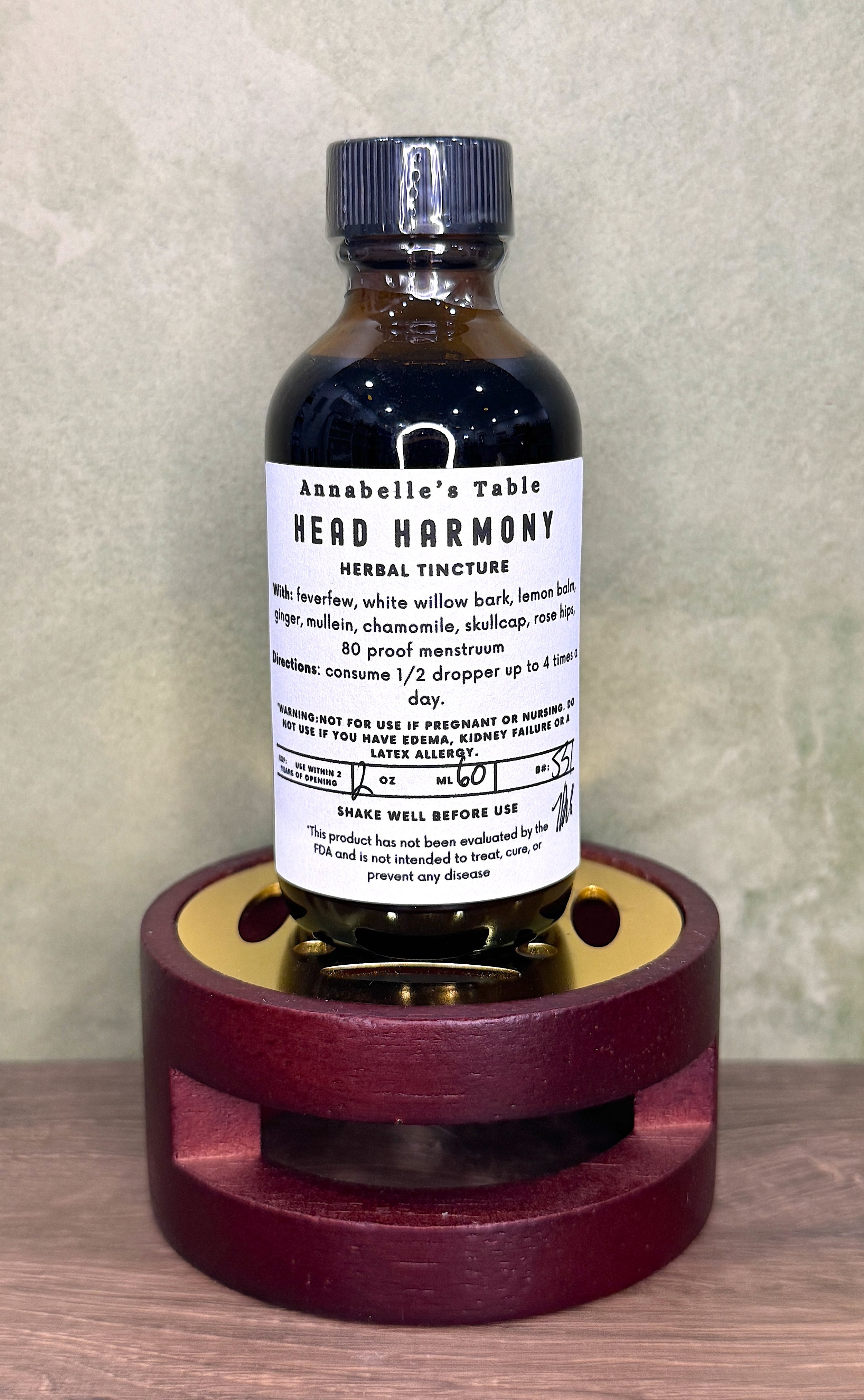
Head Harmony All Natural Organic Herbal Tincture or Glycerite
from $27.50
Are you suffering from frequent headaches? Consider trying this tincture that we’ve packed with powerful herbs that have headache relieving properties! Continue reading for more information on each individual herb we chose for this blend.
Ingredients: feverfew, white willow bark, lemon balm, ginger, chamomile, mullein, skullcap, rose hips processed in 80+ proof grain-free alcohol or sweet vegetable glycerin.
Directions: Consume 1/2 a dropper up to 4 times a day.
Warning: Not recommended for use if you are pregnant, nursing, or taking prescription blood thinners. Do not use if you have edema, kidney failure, or latex allergy.
Feverfew (Tanacetum Parthenium) a flowering herb with a long history of head association in herbalism, feverfew contains naturally occurring sesquiterpene lactones, including parthenolide, one of its most widely studied botanical constituents.
White willow bark (Salix spp.) willow bark is sometimes referred to as ‘nature’s aspirin’ due to its salicin content.
Lemon balm (Melissa Officinalis) This fragrant member of the mint family contains rosmarinic acid, flavonoids, and aromatic compounds such as citral and citronellal. It has long been associated with tranquility and relaxation in traditional herbal practices.
Ginger (Zingiber Officinale) is a warming, aromatic rhizome rich in gingerols and shogaols, two groups of compounds responsible for much of ginger's distinctive character.
Mullein (Verbascum Thapsus) Known for its distinctive soft, velvety leaves, mullein contains mucilage, flavonoids, and iridoid glycosides. It has a long history of use in traditional European and North American herbalism.
Chamomile (Matricaria Recutita) these delicate, daisy-like flowers contain apigenin, a naturally occurring flavonoid, along with aromatic compounds such as bisabolol. Chamomile has been traditionally associated with relaxation and peaceful moments.
Skullcap (Scutellaria Lateriflora) contains flavonoids such as baicalin, baicalein, and scutellarin, which have attracted scientific interest for their beneficial properties.
Rose hips (rosa, sp.) the colorful fruits of the rose plant contain naturally occurring polyphenols, carotenoids, and vitamin C, although the amounts vary depending on processing and preparation. They have long been incorporated into traditional herbal tonics.
*DISCLAIMER*
This product has not been evaluated by the FDA and is not meant to treat, diagnose, prevent, or cure disease.


